
What Nigerian Fashion Employers Are Looking For in 2026

Introduction This guide is based on direct conversations with fashion brand founders, HR managers, and creative directors across Lagos, Abuja, and Port Harcourt. It reflects what employers are actually prioritising when they hire — not just what job descriptions say, but what influences final decisions and long-term retention. Understanding what employers truly want gives you a significant advantage in your search and career development. Use this document to audit yourself honestly before your next application. PART ONE: What Every Employer Looks For Reliability & Consistency Showing up on time, meeting deadlines, and communicating proactively are rarer than talent in Nigeria’s fashion industry. Tight production timelines mean a reliable person who delivers is worth more than a brilliant one who doesn’t. Willingness to Learn Employers want people who actively invest in their own growth — not just when it’s required, but as a default habit. This includes taking feedback without defensiveness, enrolling in courses voluntarily, and staying current with industry trends. A learner’s mindset signals long-term value. Minimum 18–24 Months Commitment Fashion businesses invest significantly in onboarding and training. Candidates who demonstrate stability ideally with 18–24 months of sustained experience at previous roles are significantly preferred. Frequent job-hopping under 12 months is a red flag unless there is clear justification. Ownership & Proactive Problem-Solving Employers consistently distinguish between people who wait to be told what to do and people who identify problems and move to solve them. Fashion SMEs in particular need team members who take ownership not just of their tasks, but of outcomes. If the fabric is wrong, they don’t wait. If a client is unhappy, they act. Digital Fluency Whether in design, production, or retail, basic digital skills are expected: professional email, Google Drive, spreadsheets, and industry-specific tools. Digital ignorance is increasingly a disqualifier, especially as brands grow into e-commerce and export markets. Business Awareness The best candidates understand that fashion is a business. They think about margins, timelines, customer satisfaction, and commercial impact — not just aesthetics. Employers notice when a candidate can link their work to revenue and growth. Professional Communication How you write emails, present ideas, and respond to feedback speaks to your professionalism. Communication skills are quiet career differentiators and quiet career killers when absent. EMPLOYER VOICE: ‘I can train technical skills. I cannot train someone to be reliable, take initiative, or care about the business. Those things come with the person.’ — Lagos Fashion Brand Founder PART TWO: Skills Employers Will Pay a Premium For Beyond the baseline qualities above, certain specific skills command measurable salary premiums in Nigeria’s fashion industry in 2026. These are not commonly available which is exactly why they are valuable. Grant & Funding Application Skills Fashion brands seeking growth capital, government support, or NGO partnerships need people who can write compelling funding applications. This is rare and commands a significant premium. Relevant for: brand managers, operations leads, founders. Business Operations Fashion brands seeking growth capital, government support, or NGO partnerships need people who can write compelling funding applications. This is rare and commands a significant premium. Relevant for: brand managers, operations leads, founders. Sourcing Fabric sourcing, trim sourcing, export-compliant materials procurement, and supplier relationship management. Critical for production quality and cost control. Relevant for: buyers, production managers, designers. Marketing & Brand Strategy Campaign planning, social media management, performance marketing, brand positioning. As brands professionalise, integrated marketing becomes a senior function. Relevant for: brand managers, marketing leads Export, Customs & International Trade Campaign planning, social media management, performance marketing, brand positioning. As brands professionalise, integrated marketing becomes a senior function. Relevant for: brand managers, marketing leads Customer Acquisition & Retention Customer journey mapping, CRM, loyalty programme design, and retail customer experience. Growing brands need people who understand the full customer lifecycle. Relevant for: retail managers, customer experience leads, e-commerce managers. CLO3D / Digital Pattern Making 3D garment design and digital sampling. Reduces cost dramatically. Commands 20–40% salary premium. Relevant for: designers, pattern makers, product developers. PREMIUM SKILL SALARY PREMIUM ESTIMATE MOST RELEVANT ROLES Grant & Funding Applications +15–25% above base Brand Manager, Operations Lead Business Operations Systems +20–30% above base COO, Operations Manager Fabric & Raw Material Sourcing +15–20% above base Buyer, Production Manager Digital Marketing / Performance +15–25% above base Brand Manager, Marketing Lead Export & International Trade +20–35% above base Operations, Commercial Roles Customer Acquisition & CRM +15–25% above base Retail Manager, E-commerce Lead CLO3D / Digital Sampling +20–40% above base Designer, Pattern Maker PART THREE: The 18–24 Month Rule Nigerian fashion employers consistently flag one of their biggest frustrations: high turnover in the first 12 months. Employees leave for marginal salary increases, before they have fully developed or added strategic value. Employers are now increasingly screening for stability signals during interviews. They look for candidates who stayed in previous roles for at least 18–24 months — long enough to go from learning to contributing to leading. Short tenures are not automatically disqualifying, but they require explanation. FOR CANDIDATES: If you have short tenures, prepare a compelling explanation that focuses on what you learned and why the move was strategic not reactive. Focus on trajectory, not frequency. PART FOUR: Interview Preparation Checklist Research the brand thoroughly: collections, social media, pricing, recent news Prepare 5 specific achievements with measurable outcomes from your experience Prepare 3 thoughtful questions for the interviewer — not about salary on a first interview Dress aligned with the brand’s aesthetic — demonstrate you understand their world Arrive early. Punctuality is noticed and remembered. Follow up with a professional thank-you email within 24 hours If rejected, ask for feedback — and actually use it. EMPLOYER VOICE: ‘I can train technical skills. I cannot train someone to be reliable, take initiative, or care about the business. Those things come with the person.’ — Lagos Fashion Brand Founder
How to Write a Fashion & Creative Industry CV

How to Write a Fashion & Creative Industry CV Why This Guide Is Different Most CV guides are written for corporate roles. This one is written specifically for Nigeria’s fashion and creative industry — where portfolios matter more than degrees, where practical experience often trumps formal qualifications, and where cultural fit with a brand’s aesthetic is a real selection criterion. A fashion CV in Nigeria must do three things immediately: show you understand the industry, show you can deliver results, and make a visually clean impression. Anything less loses the opportunity. The Fashion CV — What’s Different Most CV guides are written for corporate roles. This one is written specifically for Nigeria’s fashion and creative industry — where portfolios matter more than degrees, where practical experience often trumps formal qualifications, and where cultural fit with a brand’s aesthetic is a real selection criterion. A fashion CV in Nigeria must do three things immediately: show you understand the industry, show you can deliver results, and make a visually clean impression. Anything less loses the opportunity. CORPORATE CV FASHION & CREATIVE CV Education leads Portfolio link leads — on line 1 Job titles emphasised Skills and deliverables emphasised Formal language Clear, direct, personality visible 3 pages acceptable 1–2 pages maximum References listed Portfolio and links replace references initially Objective statement Professional summary with niche and value prop Generic ‘team player’ Specific: ‘Womenswear Production | Lagos & Abuja’ Section-by-Section Guide Header Name, city (not full address), phone, email, and — most importantly — a portfolio link. Include Instagram handle only if it reflects your professional work. The portfolio link is non-negotiable for any creative or design role. Format: Use a clean, uncluttered header. Name in bold at 14–16pt. All other details at 10–11pt. No photo unless explicitly requested. Professional Summary (3–4 Lines Maximum) This is your pitch. It should answer: What is your specific niche? What is your level? What kind of brands have you served or want to serve? What is your signature strength? EXAMPLE FOR A PRODUCTION PROFESSIONAL:’Production-focused fashion professional with 4 years experience managing garment manufacturing across woven and knit categories for mid-to-premium Nigerian brands. Track record of reducing sample turnaround by 40% while maintaining 98% quality pass rates. Now seeking a production manager role within a brand with export ambitions.’EXAMPLE FOR A CREATIVE:’Lagos-based wardrobe stylist specialising in editorial and commercial fashion with a client portfolio across beauty brands, music videos, and print campaigns. Known for precision sourcing, strong directorial instincts, and ability to execute on tight timelines.’ Key Skills List 8–12 specific, relevant skills. In the fashion industry this might include: CLO3D, Adobe Illustrator, Photoshop, pattern drafting, Shopify, trend analysis, WSSI, fabric sourcing, supplier negotiation, studio management, talent coordination, event styling. Never list generic qualities like ‘hardworking’ or ‘team player’ as skills. These belong in your summary, and only if they are backed by evidence. Work Experience — The Most Important Section For every role, write 2–3 bullet points focused on what CHANGED because of your work. Use numbers wherever possible. In Nigeria’s fashion industry, employers are looking for evidence of real, practical impact. Education & Professional Training In Nigeria’s fashion industry, practical training carries significant weight. A FADAN certificate, a Bridge Institute completion, a CLO3D bootcamp, or a visual merchandising course can outweigh a generic degree for many roles. List all relevant qualifications — formal and informal — in reverse chronological order. Include: institution, qualification name, year, and any notable project or grade. WEAK (NEVER WRITE THIS) STRONG (ALWAYS AIM FOR THIS) ‘Assisted the design team’ ‘Contributed 12 original sketches to SS2025 collection, 4 of which were selected for production’ ‘Handled customer queries’ ‘Managed customer communications for a 2,000-customer retail base, achieving 94% satisfaction rate’ ‘Responsible for sourcing’ ‘Sourced alternative fabric supplier reducing unit cost by 18% while maintaining quality standard’ ‘Worked on marketing campaigns’ ‘Led Instagram campaign that grew brand following from 8K to 22K in 90 days with ₦0 ad spend’ ‘Managed the team’ ‘Managed a team of 6 across design and production, delivering 3 collections on time and on budget’ Portfolio — The Clincher Every application must include a portfolio link. Options include: Behance, a personal website, a Google Drive folder (with permission set to ‘anyone with the link’), a curated Instagram profile, or a Canva presentation link. Quality Rule: 5 excellent portfolio pieces beat 20 mediocre ones. Curate ruthlessly. Every item in your portfolio should represent your best, most relevant work. Fashion CV Dos and Don’ts DO DON'T Lead with your portfolio link Lead with your secondary school qualification Name your specific niche clearly Describe yourself vaguely as a ‘fashion lover’ Quantify results in every job List responsibilities without outcomes Tailor every CV to the specific brand Send identical CVs to every application Use one clean, readable font (Fira Sans, Helvetica, Garamond) Use multiple fonts and decorative typefaces Keep to 1–2 pages Pad with irrelevant experience to fill pages Include short courses and certifications Omit non-degree training you are proud of NIGERIAN-SPECIFIC NOTE: Many Nigerian fashion employers will look up your Instagram and LinkedIn before they read your CV in full. Your social media presence is your first impression. Make sure what they find supports what your CV claims. FILLABLE CV TEMPLATE Complete every section below. Replace placeholder text with your own. Delete sections that are not applicable to your stage or role. [YOUR FULL NAME [City] | [Phone] | [Email] Portfolio: [link] | Instagram: [@handle] | LinkedIn: [link] FASHION & CREATIVE CV PROFESSIONAL SUMMARY [Write 3–4 sentences. Name your niche (e.g. Production | Styling | Buying | Design). State your level and specialisation. Mention the type of brands you have worked with or want to work with. Highlight your most unique professional quality.] KEY SKILLS [List 8–12 specific skills, e.g.: CLO3D | Adobe Illustrator | Pattern Making | WSSI Planning | Trend Forecasting | Shopify | Fabric Sourcing | Team Management | Grant Writing | Export Documentation] WORK EXPERIENCE CORPORATE CV FASHION & CREATIVE CV [Most Recent Job Title] [Brand / Organisation
30 Future Fashion Leaders Graduate from Bridge Program Cohort 1
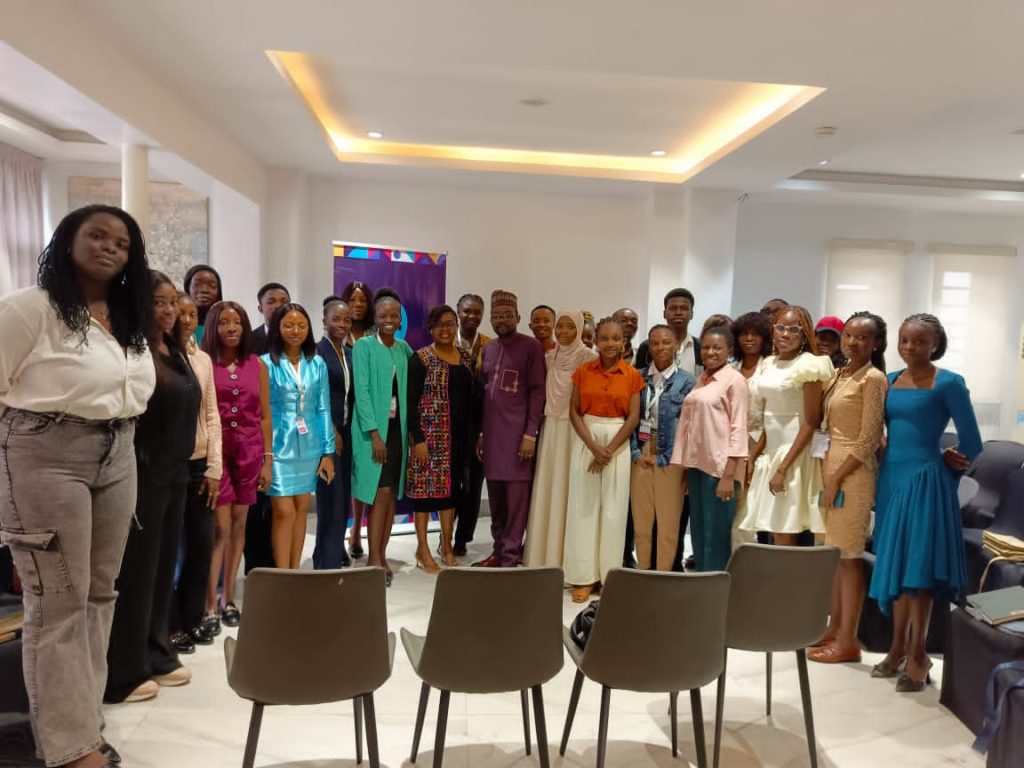
30 Future Fashion Leaders Graduate from Bridge Program Cohort 1 The Bridge Program, launched on August 31, 2024, celebrated the completion of its first cohort on October 12, 2024, leaving a lasting impact on the fashion industry by equipping 30 participants with cutting-edge skills in four pivotal tracks: Fashion Business Management, Fashion Business Intelligence, Apparel Production Management, and Apparel Retail and Merchandising. Over six weeks, the program provided an exceptional learning experience, led by 21 distinguished facilitators from Nigeria, the UK, and the US. Participants were immersed in a world of global insights, practical lessons, and hands-on field trips to industry leaders like KLO Fashion Manufacturing and Trax Apparel. The journey culminated in a grand Entrepreneurship Day held at Admire Wardrobe in Lagos. Here, participants showcased their expertise by presenting innovative case studies to a panel of industry leaders, including: Rhoda Aguonigho – Lhaude Africa Bernice Asein – Fashion Law Institute Chioma Ukpabi – SUWK Technologies Ezeoke Okechukwu – KLO Fashion Manufacturing The event also welcomed Professor Adebisi from the University of Lagos’ Entrepreneurship and Skills Development Centre, who emphasized the critical role of sustainable fashion businesses in shaping the future of the industry. Measurable Impact The program’s first cohort achieved remarkable success, with 25% of graduates securing internships and job placements in reputable fashion organizations within weeks of completion. A Vision for the Future The Bridge Program is not just a course; it’s a transformative journey committed to shaping future fashion leaders and fostering sustainable practices in the fashion industry. Do you dream of making your mark in fashion? Don’t miss your chance to join the next cohort. learn more and register now!
NAVIGATING INCOME POLICIES IN THE NIGERIAN FASHION INDUSTRY: INSIGHTS AND STRATEGIES FOR SUCCESS

Blog Posts April 23, 2024 NAVIGATING INCOME POLICIES IN THE NIGERIAN FASHION INDUSTRY: INSIGHTS AND STRATEGIES FOR SUCCESS Credit: veeteezy Introduction: In the world of the Nigerian fashion industry, understanding the intricacies of income policies is paramount for businesses seeking sustainable growth and profitability. From government regulations to economic factors and market trends, various elements shape income generation within the industry. In this article, we explore the multifaceted aspects of income policies and offer actionable insights for fashion entrepreneurs and stakeholders. Government Policies and Regulations: Government policies play a significant role in shaping the operating environment for businesses in the Nigerian fashion industry. From taxation policies to import/export regulations, trade agreements, and industry-specific legislation, policymakers wield considerable influence over income generation within the sector. For instance, recent changes in tax laws have implications for businesses’ profit margins and financial planning, while trade agreements impact the availability and cost of raw materials and finished goods. Impact of Policy Changes: Policy changes can have far-reaching effects on income generation within the Nigerian fashion industry. For example, shifts in import/export regulations may disrupt supply chains and affect production costs, while changes in taxation policies can impact businesses’ bottom line. Moreover, industry-specific legislation, such as standards for product labelling and safety, can influence consumer trust and purchasing decisions. By staying abreast of policy developments and understanding their implications, fashion businesses can adapt their strategies and mitigate potential risks. Economic Factors Influencing Income: The Nigerian fashion industry operates within a broader economic context shaped by various factors, including inflation, exchange rates, and economic downturns. Fluctuations in currency values, for instance, can impact the cost of imported materials and affect businesses’ pricing strategies. Similarly, periods of economic instability may lead to changes in consumer spending patterns, influencing demand for fashion products and services. By monitoring economic indicators and adapting their strategies accordingly, businesses can navigate economic challenges and capitalize on opportunities for income generation. Income Disparities and Social Inequality: Income disparities and social inequality pose significant challenges within the Nigerian fashion industry. Gender wage gaps, for example, persist across various sectors and roles, limiting economic opportunities for women in the workforce. Additionally, marginalized groups face barriers to entry and advancement within the industry, perpetuating social and economic inequalities. To address these issues, stakeholders must prioritize diversity, equity, and inclusion initiatives, fostering a more equitable and inclusive environment for all. Market Trends and Consumer Behavior: Understanding market trends and consumer behaviour is essential for fashion businesses seeking to optimize income generation. The rise of sustainable fashion, for instance, reflects a growing consumer preference for ethically produced and environmentally friendly products. Similarly, the increasing influence of social media on purchasing decisions underscores the importance of digital marketing and engagement strategies. By aligning their offerings with evolving consumer preferences and market trends, businesses can enhance their competitiveness and drive income growth. Technological Innovations and Income Generation: Technological innovations play a transformative role in income generation within the Nigerian fashion industry. E-commerce platforms and digital marketing tools offer businesses new avenues for reaching customers and driving sales. Data analytics enable targeted marketing campaigns and personalized customer experiences, enhancing sales conversion rates and customer loyalty. By embracing technology and innovation, fashion businesses can unlock new income streams and gain a competitive edge in the marketplace. Collaborations and Partnerships: Strategic collaborations and partnerships are essential for expanding market reach and driving income growth in the Nigerian fashion industry. From supplier relationships to brand collaborations and cross-industry partnerships, businesses can leverage synergies and collective strengths to achieve mutual goals. By forging strategic alliances with complementary businesses and stakeholders, fashion entrepreneurs can access new distribution channels, tap into new customer segments, and capitalize on shared resources and expertise. Future Outlook and Opportunities: Looking ahead, the Nigerian fashion industry presents a wealth of opportunities for income generation and growth. With the right strategies and mindset, businesses can navigate challenges and capitalize on emerging trends and market dynamics. By staying agile, innovative, and customer-centric, fashion entrepreneurs can position themselves for success in an increasingly competitive and dynamic industry landscape. Conclusion: In conclusion, navigating income policies in the Nigerian fashion industry requires a comprehensive understanding of government regulations, economic factors, market trends, and consumer behavior. By staying informed, adaptable, and forward-thinking, fashion businesses can optimize income generation, drive sustainable growth, and contribute to the industry’s continued evolution and success. NAVIGATING INCOME POLICIES IN THE NIGERIAN FASHION INDUSTRY: INSIGHTS AND STRATEGIES FOR SUCCESS Learn more THE FASHION LABOUR MARKET IN NIGERIA: A COMPREHENSIVE ANALYSIS OF EMPLOYMENT TRENDS Learn more